Published by: Structural Engineering & B2B Packaging Team (Collapsible Rigid Boxes Experts) · Reading Time: 6 mins · Categories: Manufacturing, Material, Sustainability
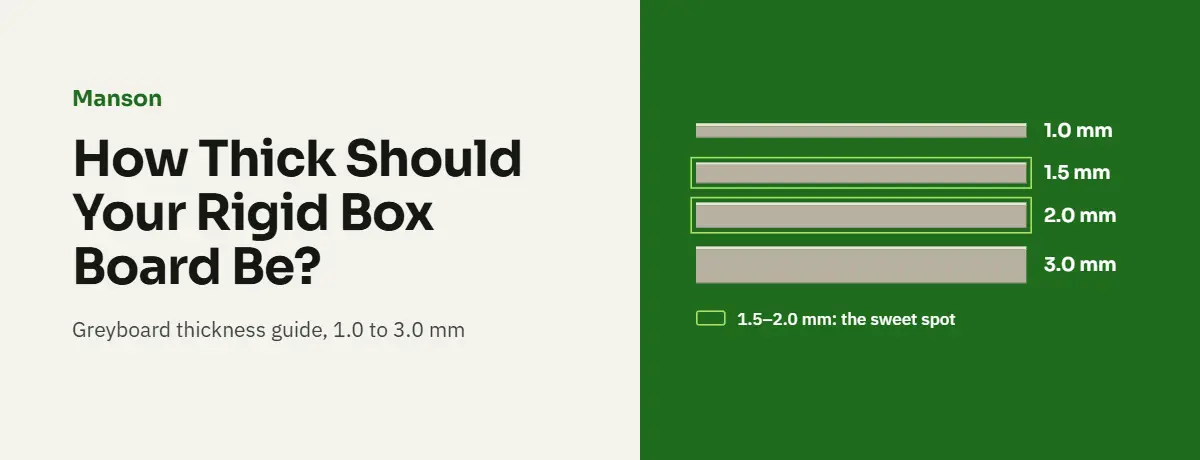
[Key Takeaways] For most rigid gift boxes, the best greyboard thickness is 1.5–2.0 mm. Going thicker only pays off for heavy products or large formats. Choosing the right thickness is the single cheapest way to reduce warping, shipping volume and packaging weight at the same time.
Why board thickness is the first decision, not the last
When buyers request a rigid box quote, they usually focus on size, print and finishing. Board thickness often gets left as “standard.” Yet it quietly decides how the box feels in the hand, whether it stays flat after two months, and how many boxes fit in a carton.
In our earlier articles we looked at why rigid gift boxes warp, how collapsible designs cut shipping CBM by 75%, and how EU PPWR rules are reshaping material standards. All three come back to one question: how thick should the greyboard be?
This guide explains how to choose greyboard thickness, from the factory floor.
Part I. Greyboard thickness options and where they fit
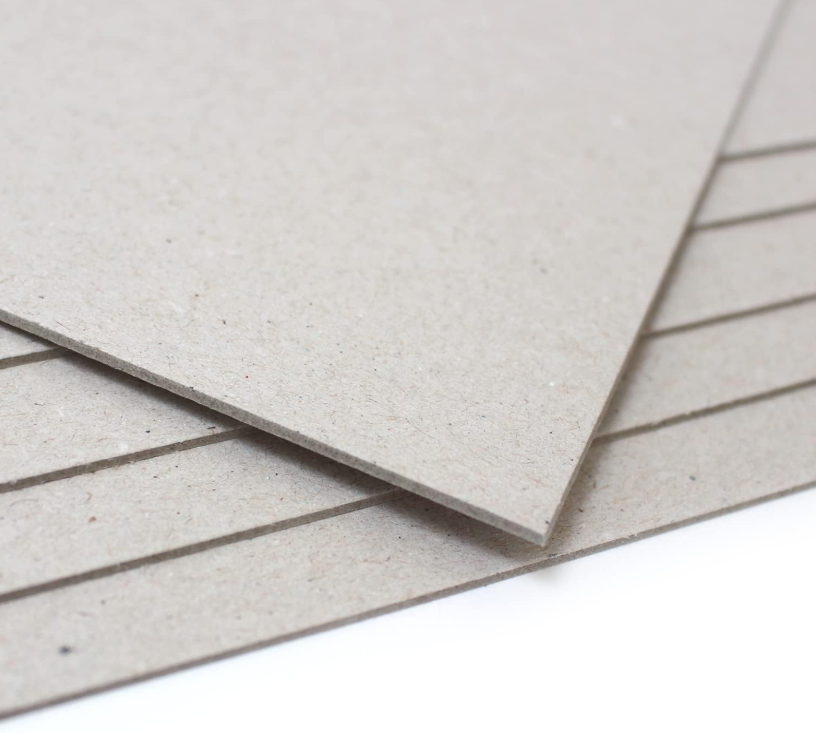
Most rigid boxes are built from 1.0 mm to 3.0 mm greyboard, wrapped in printed paper or specialty material. Here is how we typically match thickness to product.
| Board thickness | Typical products | Product weight | Feel and strength |
|---|---|---|---|
| 1.0–1.2 mm | Jewelry, small cosmetics, cards | Under 200 g | Light; fine for small formats only |
| 1.5 mm | Skincare sets, candles, apparel accessories | 200–800 g | Our most-used choice; solid and cost-efficient |
| 2.0 mm | Perfume, electronics, wine accessories | 0.8–2 kg | Premium hand-feel; resists warping on mid-size lids |
| 2.5–3.0 mm | Liquor, watches, large gift sets, PR kits | 2 kg and up | Luxury weight; for large panels and heavy inserts |
These ranges are starting points. Box size matters as much as product weight: a 40 cm lid needs thicker board than a 10 cm lid holding the same item.
Part II.What thickness changes: warping, shipping, cost and compliance
1. Warping resistance
Warping happens when the wrapping paper and glue shrink at a different rate than the board. Thicker board is stiffer, so it resists that pull better. But thickness alone won’t fix it. Board density, glue moisture and paper grain direction matter just as much, as we explained in our warping guide. A well-made 1.5 mm box often stays flatter than a badly balanced 2.5 mm one.
2. Shipping volume and weight
Every extra millimetre adds weight and, for classic assembled boxes, adds nothing to how many fit in a carton. For collapsible rigid boxes the effect is bigger: flat-packed panels stack tightly, so thinner board means more units per carton and lower CBM. For large orders, moving from 2.5 mm to 2.0 mm can noticeably cut freight weight while keeping a premium feel.
3. Unit cost
Board is a major part of rigid box material cost. Thicker board costs more per sheet, is harder to cut and wrap, and can slow production. Over-specifying is one of the most common ways first-time buyers overpay.
4. PPWR and material reduction
The EU Packaging and Packaging Waste Regulation (Regulation (EU) 2025/40) has applied since 12 August 2026 and pushes brands to minimise packaging weight and volume. The European Commission’s official PPWR guidance document explains how these rules are applied. Choosing the thinnest board that still protects the product is a practical, documentable step toward that goal. Recycled greyboard that is fully paper-based also keeps the box mono-material and easier to recycle.
Part III. How to choose: a 5-step checklist for buyers
- Weigh the packed product, including inserts. This sets your starting greyboard thickness from the table above.
- Check the largest panel. Lids or bases longer than about 30 cm usually need one step thicker.
- Decide on structure. Collapsible boxes with magnetic closures benefit from thinner, well-balanced board to save CBM.
- Consider destination and climate. Humid markets and long sea freight raise warping risk, so ask about board density and moisture control, not just thickness.
- Approve a physical sample. Hand-feel is subjective. A sample with your real product settles the choice faster than any spec sheet.
Part IV. FAQ
Is thicker board always more premium? No. Premium feel comes from clean wrapping, tight corners and good finishing as much as from weight.
Can I change thickness after sampling? Yes. It is one of the easiest adjustments before mass production, and it does not affect artwork.
Does thickness affect MOQ? Not usually. Standard thicknesses are kept in stock. Special densities or colored boards may carry higher minimums, as covered in our MOQ guide.
Not sure which greyboard thickness fits your product?
Send us your product size, weight and target market. Our structural engineering team will recommend a board specification and prepare a sample for you to test. Contact us to get started.